Frequently Asked Questions
Find factual answers to common questions about solar energy, battery storage and Cypress Creek’s projects, with cited research and sources for further reading. Select a topic and subtopic to quickly find the information you’re looking for.
Filter FAQs
About Cypress Creek Energy
Company Overview
What is Cypress Creek Energy?
Cypress Creek delivers American-made energy including solar and energy storage, with one of largest operating fleets in the country. Built on more than a decade of hands-on operating experience and a long-term ownership approach, we develop, build, and operate projects that provide reliable, affordable electricity, support local communities, and help meet our nation’s rapidly growing energy demand.
How long has Cypress Creek been developing energy projects?
Cypress Creek is a U.S. company with more than a decade of hands-on experience and a long-term ownership approach.
What types of energy projects do Cypress Creek develop?
Cypress Creek develops, finances, owns, and provides operations and maintenance services for American energy infrastructure including solar, storage, and firm capacity solutions that provide dependable power and lasting benefits for local communities.
What does responsible development mean at Cypress Creek?
As a long-term owner and operator, Cypress Creek approaches each project with the mindset that we will be part of the community for years to come. We engage local officials and community members throughout the development process, seek feedback on how best to integrate projects into the surrounding landscape, and take a responsible approach that protects natural resources and preserves the land for future generations.
Community Commitment
How does Cypress Creek engage with local communities?
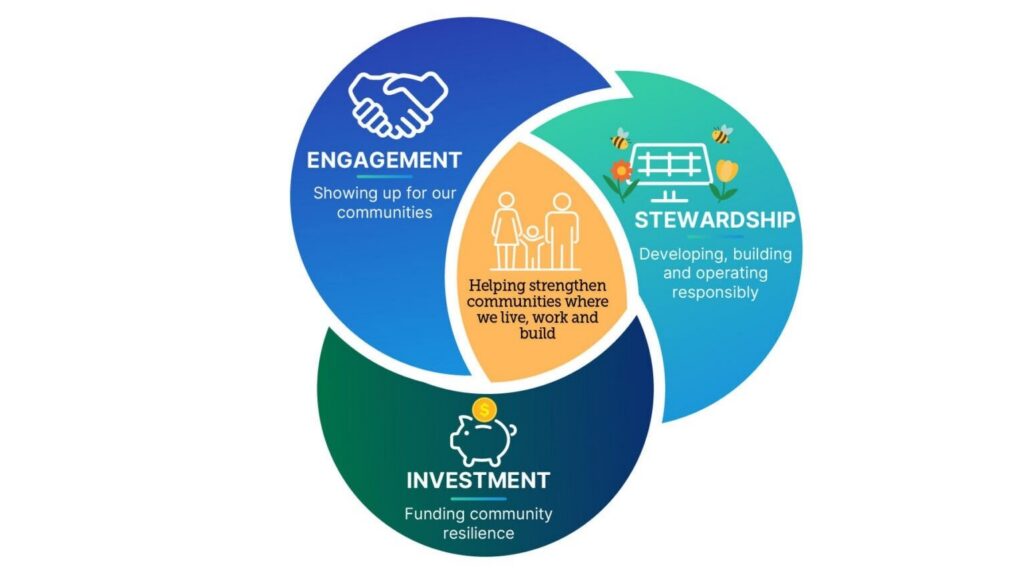
At Cypress Creek, we believe our work should help strengthen the communities where we live, work, and build. Our commitment comes to life through three connected efforts: developing and operating responsibly, investing in communities, and building meaningful partnerships through community engagement.
How does Cypress Creek handle concerns from neighbors or landowners?
Cypress Creek works to maintain open lines of communication with neighbors and landowners throughout a project’s lifespan. We believe concerns are best addressed through ongoing dialogue and accessible points of contact. Each project website includes information about the project team, including dedicated contacts from Cypress Creek’s community and stakeholder engagement team and government affairs and economic development team. Community members can contact the team directly by phone or submit questions, feedback, or concerns through an online form, helping ensure inquiries are tracked and addressed promptly.
Media & Contact
Who should media inquiries be directed to?
Media inquiries should be directed to [email protected].
Solar
Project Basics
How long do Cypress Creek solar projects last?
Our solar projects are designed to operate for 30 to 40 years, delivering reliable energy for decades to come. As a long-term owner and operator, Cypress Creek remains involved throughout the life of a project, supporting ongoing operations and maintenance while continuing to invest in local communities.
How are solar projects permitted?
Our development team works closely with landowners, local officials, permitting agencies, and community members to shape a project that fits the area and addresses local priorities. Environmental and cultural studies are conducted to protect natural resources and respect local history, while permitting ensures compliance with all federal, state, and local requirements.
What is a solar project?
A solar project is a site with ground-mounted photovoltaic (PV) panels that convert sunlight into electricity. Community solar projects are smaller in scale, while utility-scale solar projects generate enough power for tens of thousands of homes and businesses and typically deliver that electricity to the grid, similar to traditional power plants. Many projects also include battery energy storage, which helps provide power when the sun is not shining and supports grid reliability.
What kind of land is suitable for a solar project?
Each project site is carefully evaluated to help ensure a stable foundation, protect natural resources, and meet regulatory requirements. Suitable locations often include open land with strong sun exposure, relatively level terrain, stable soil conditions, and access to existing transmission infrastructure. Site selection also considers environmental factors, existing land uses, and compatibility with surrounding areas.
What is the development timeline for a solar project?
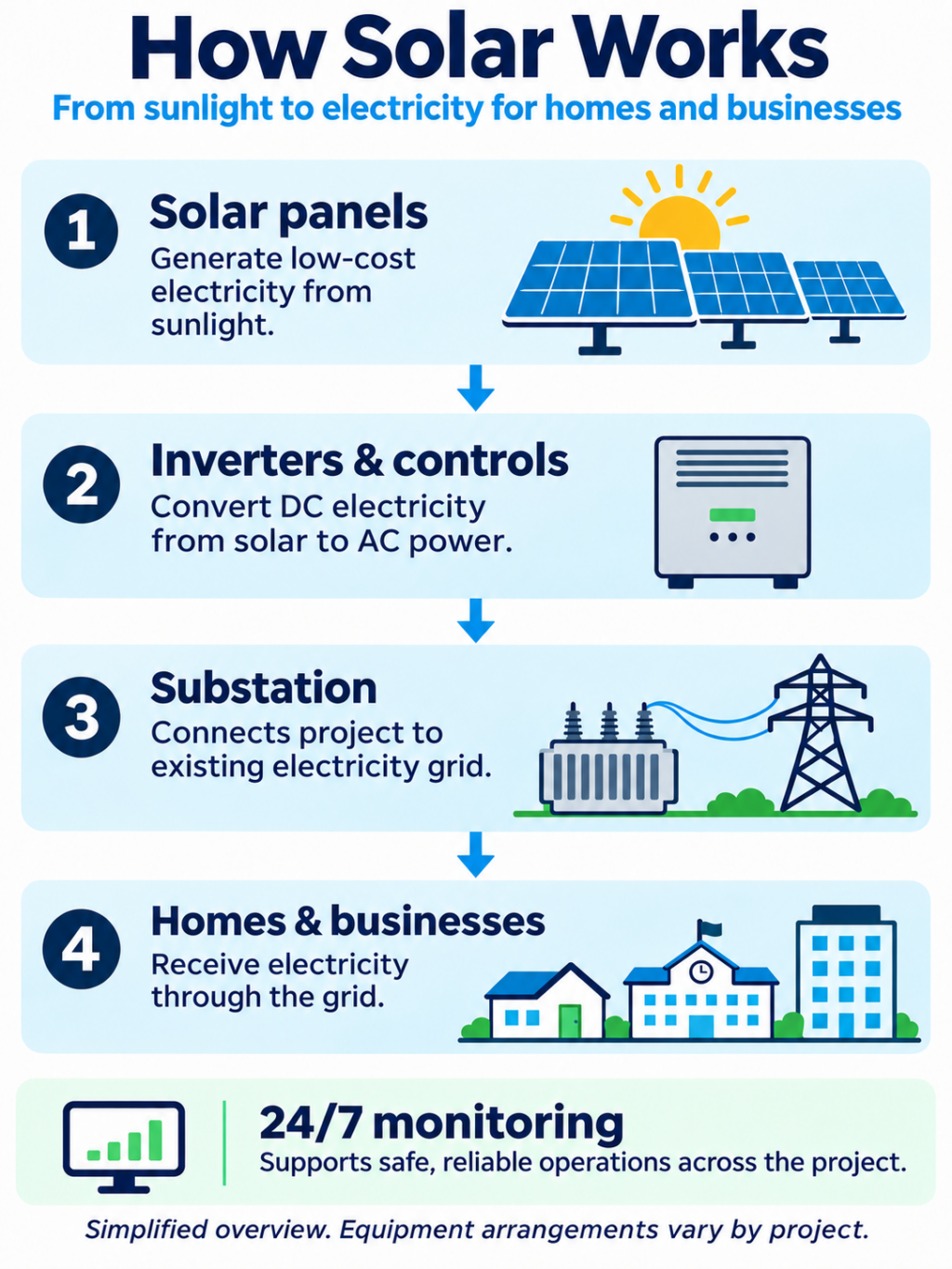
Solar project development is a careful, multi-year process that typically takes 5 to 7 years. The process includes securing approval to connect to the electric grid, conducting environmental and cultural studies, engaging with stakeholders and communities, obtaining permits, and completing other key steps to help ensure a project is feasible, responsibly sited, and suitable for long-term operation.
How are solar projects maintained?
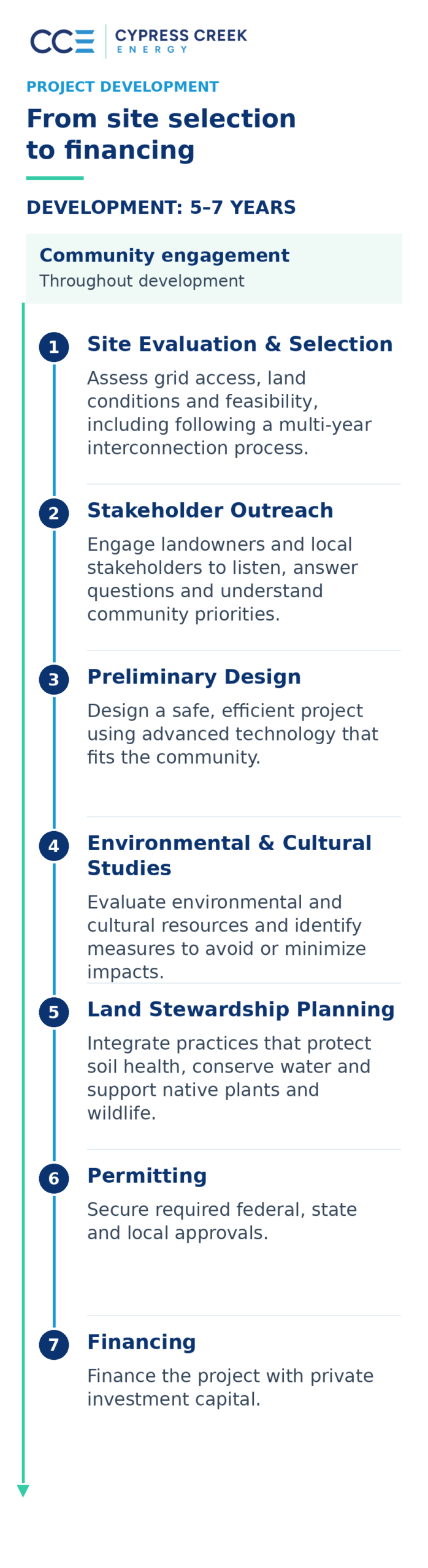
Every Cypress Creek project is monitored around the clock by our in-house operations and maintenance team. Advanced systems track performance in real time to support safe and reliable operations. Our teams regularly inspect and service equipment as needed, while vegetation is managed through mowing and other maintenance practices. Some sites also use livestock grazing, which helps manage vegetation while supporting agricultural dual-use of the land.
What are the components of a solar project that will be installed?
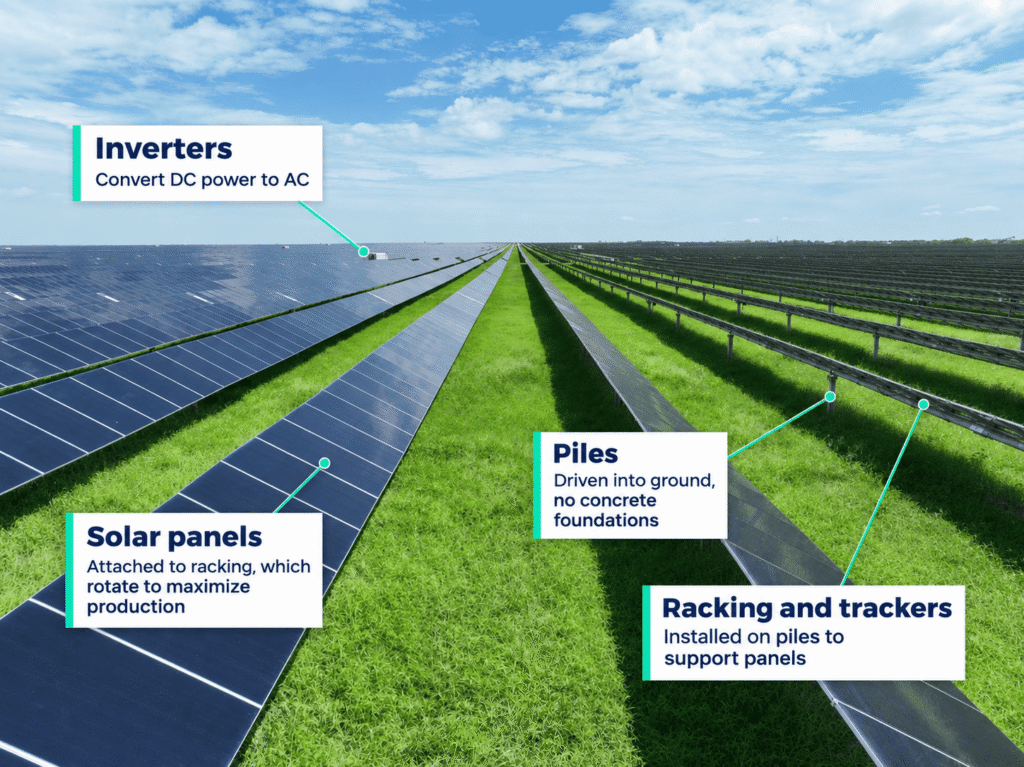
Solar projects are made up of the following building blocks:
- Steel posts, called piles, are driven directly into the ground in order to support racking and solar panels. The piles take up less than 5% of the total land, and there are no concrete foundations.
- Racking and trackers are fastened atop the piles. Height from ground to racking is about 4 to 6 feet, depending on the size of the solar panels.
- Solar panels which generate direct current (DC) power from sunlight are attached to the racking.
- Inverters convert DC power to alternating current (AC) power, along with a medium-voltage transformer that allows the AC power to be combined and travel to a substation.
- A substation is the main point of connection to the existing grid.
Solar Basics
Why do we need utility-scale solar projects instead of just rooftop solar?
Rooftop solar plays an important role, but it is not enough to meet America’s growing electricity needs, nor is it the most cost-effective option. Many rooftops are not ideally located, sturdy enough, or large enough to generate significant amounts of power. Even if every suitable rooftop had solar panels, rooftop solar alone could not generate enough electricity to meet America’s growing energy needs.
That’s why utility-scale solar is essential. It accounts for more than 70% of all solar capacity built in America because it is faster, more efficient, and far more affordable to build at scale than rooftop systems. That lower cost helps keep electricity more affordable for families and businesses as demand continues to grow from new manufacturing, data centers, electric vehicles, and population growth. Utility-scale solar is helping deliver the affordable, American-made electricity our country needs at the scale it requires.
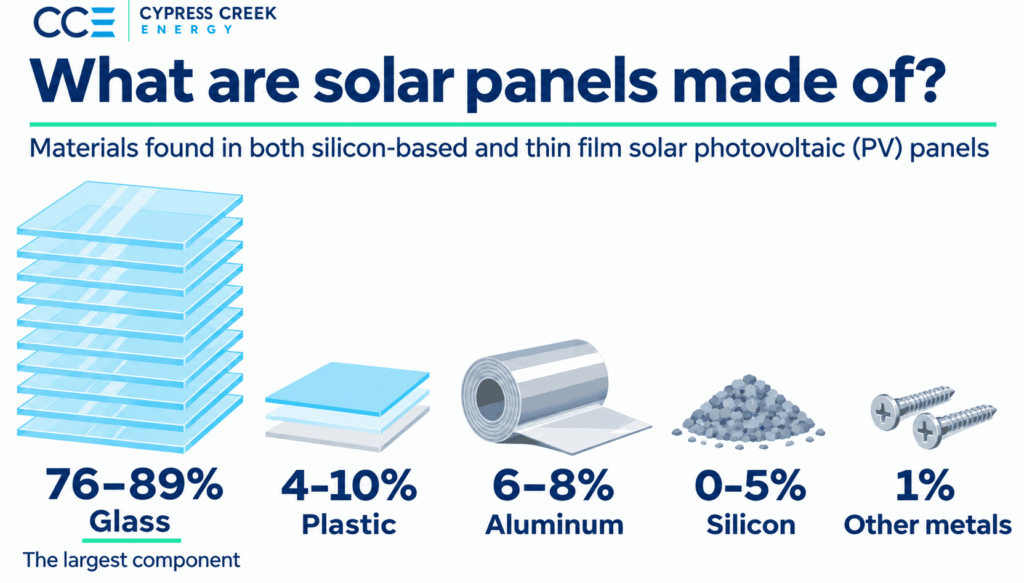
What are solar panels made of?
Both silicon-based and thin-film solar photovoltaic (PV) panels are made up of the following materials:
- Glass (76-89%)
- Plastic (4-10%)
- Aluminum (6-8%)
- Silicon (0-5%)
- Other metals (1%)
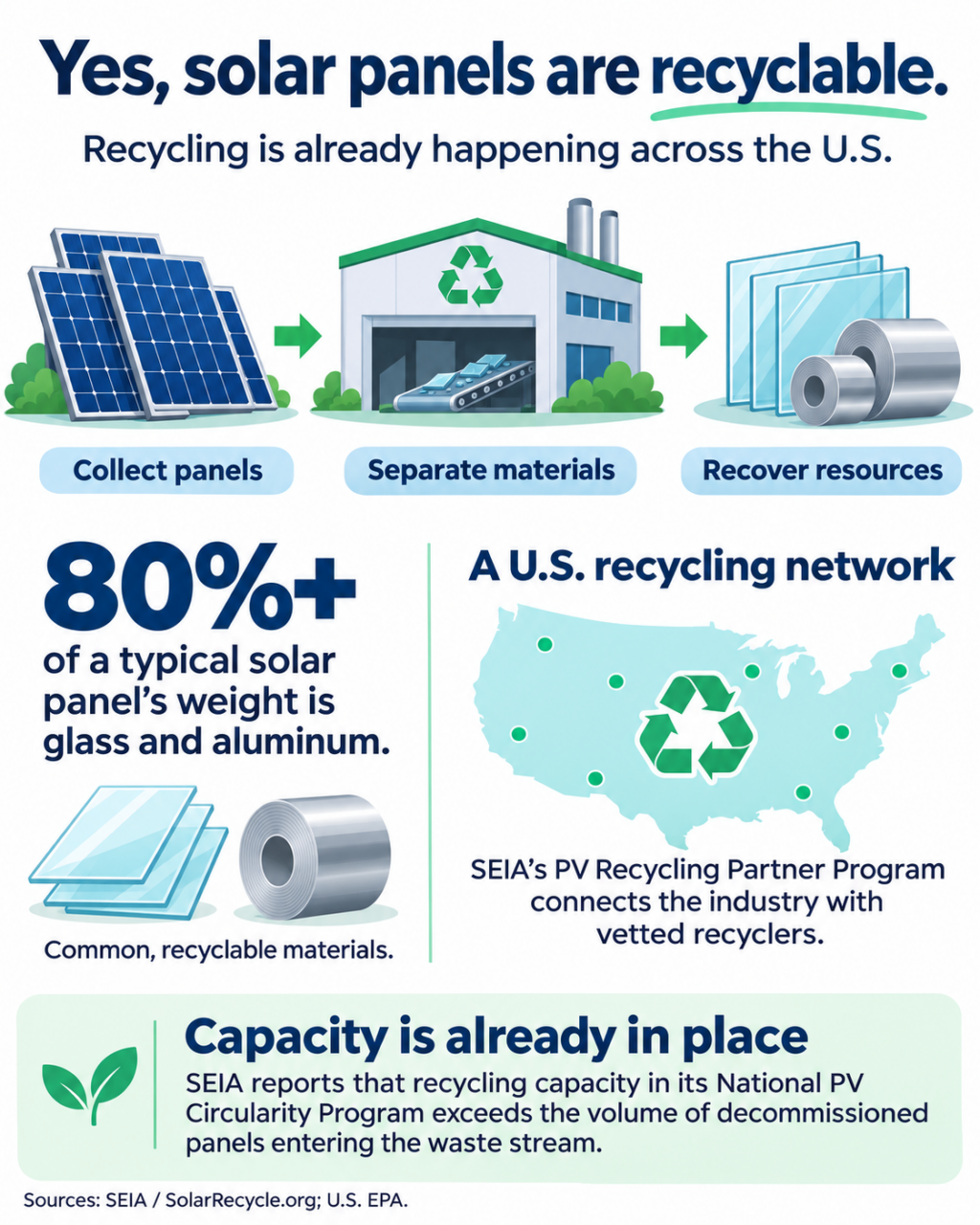
By weight, more than 80% of a typical solar panel is glass and aluminum, both common and easy-to-recycle materials.
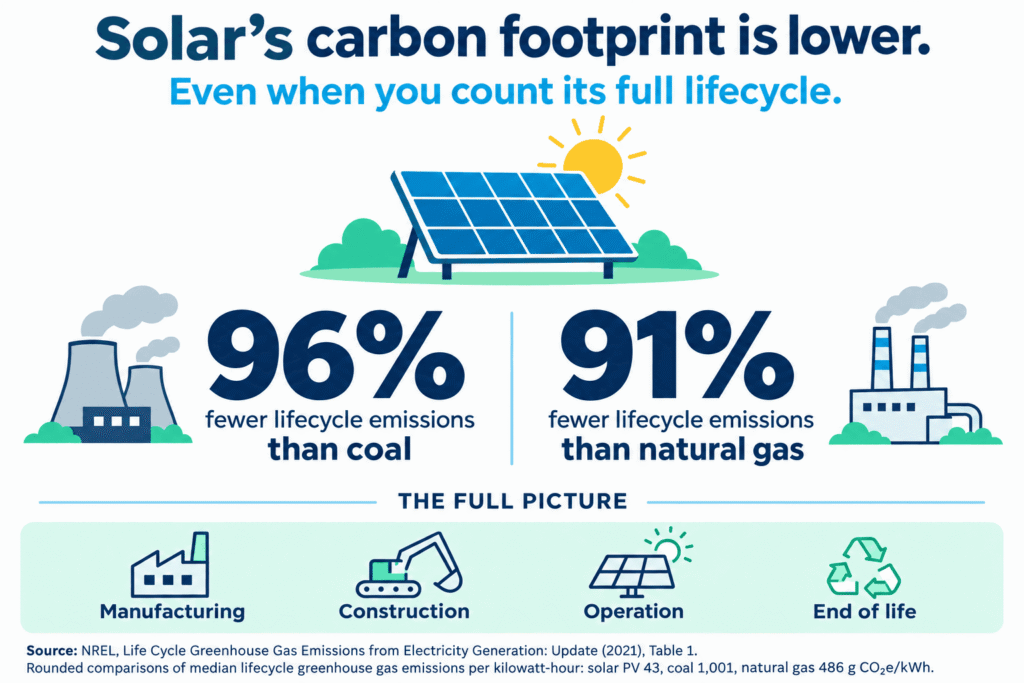
Is solar really lowering carbon emissions when you look at its full lifecycle?
Yes. Even when you account for manufacturing, construction, operation, and end-of-life recycling, solar has one of the lowest carbon footprints of any source of electricity. According to the National Laboratory of the Rockies (formerly NREL), utility-scale solar produces 96% fewer lifecycle greenhouse gas emissions than coal and 91% fewer than natural gas.
Is solar electricity more or less expensive than electricity produced by fossil fuels?
Solar photovoltaic (PV) generated electricity is less expensive. The increase in competitiveness of solar in the last two decades has been dramatic. In 2010, solar was more expensive than fossil fuel-fired electricity, but by 2024, solar cost 41% less than the cheapest fossil fuel-fired solution.
Recent studies have estimated that without renewable energy, ratepayers in Mid-Atlantic and Midwest states would pay an additional $360 billion in electric bills over the next decade.
Sources: International Renewable Energy Agency, American Clean Power Association
Community Impact
How do solar projects benefit local communities?
Solar projects provide steady, reliable benefits for their communities:
- Additional local revenue: Solar projects generate new tax revenue that helps support schools, roads, emergency services, and other community priorities. Increased tax revenues can also help stabilize property taxes for local residents.
- Increased energy security and lower energy costs: Solar projects help diversify our energy mix, strengthen local energy infrastructure, reduce dependence on imported energy sources, and provide cost-effective electricity.
- Environmental benefits: Solar projects generate electricity with no air emissions during operation. Research has shown that solar facilities can also improve pollinator habitat, reduce nutrient runoff, and help retain stormwater compared to other land uses.
- Jobs and economic activity: Solar projects create construction jobs and support local businesses. Today, the U.S. solar industry employs more than 280,000 Americans, with domestic manufacturing continuing to grow.
Construction Impact
What if there is road damage during construction of the solar project?
Prior to the start of construction, the Cypress Creek team works with state and county agencies as appropriate to develop a road use plan that includes expected transportation routes, the anticipated number of trucks, and maximum truck weights. The plan documents the existing condition of the roadways. If road damage occurs, it will be repaired to its original or an improved condition.
How will dust be controlled?
During construction, a project’s construction contractor is required to implement a dust control plan, which typically includes keeping any dirt damp by bringing in trucks to spray water.
Property Values
Does a solar project hurt the property value of a nearby home or farm?
Cypress Creek commits to developing projects that respect the character of the area. Studies in multiple states have found no negative impact on either nearby home or agricultural property values after construction of a solar facility. In many cases, solar projects can indirectly benefit property values by economically supporting the landowner through lease payments and the broader community through tax revenue that provides funds for roads, schools, and other community services.
Source: American Clean Power Association
Land Use
What happens to the land after the solar project ends?
Solar project sites are planned with the future in mind. Cypress Creek submits a full decommissioning plan for a solar project, adhering to any applicable state or local jurisdiction requirements and policies. The plan ensures that the solar equipment will be dismantled, removed, and recycled at the end of its life and that the land can return to agricultural activities or another use as landowners decide, at no cost to the landowner.
Can farmland and solar coexist?
Yes. Farmland can thrive alongside solar installations. Leasing a portion of their land for solar provides more diversified revenue for landowners and generations of their families. It also contributes to the economics of their farming business, providing a steady stream of income that oftentimes enables them to continue farming on their other land and keep the land in the family during hard economic times. In the future, at the end of the project life, the land can be returned to farming.
Is it a concern that we are losing land to solar?
Solar does not pose a significant risk to loss of land. In fact, solar projects temporarily set aside land and protect it from permanent loss due to industrialization and urbanization.
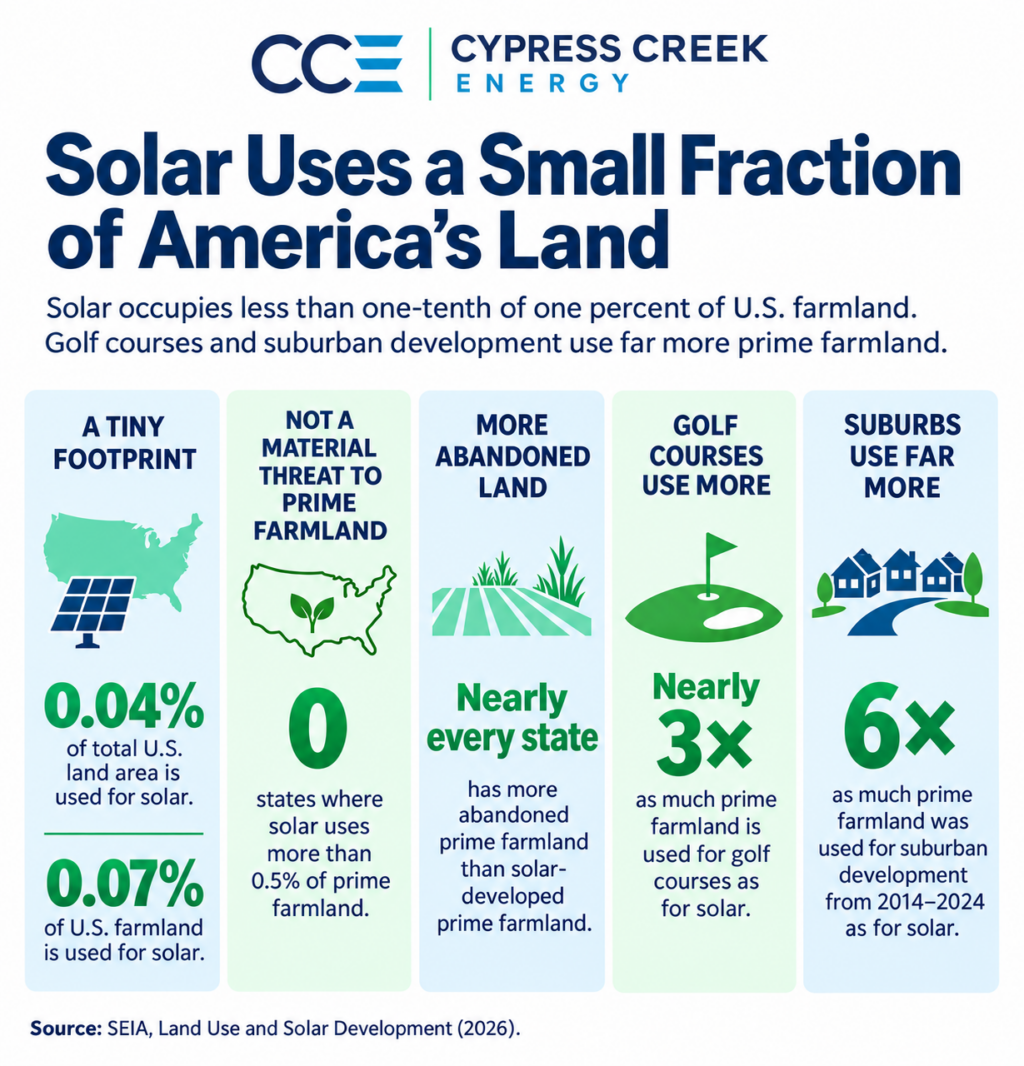
Studies have found that solar panels cover less than 1/10 of a single percent of agricultural land in the U.S., and that golf courses and suburbs have taken over far more prime farmland.
- Solar currently uses just 0.04% of total U.S. land area and 0.07% of U.S. farmland.
- There are zero states where solar uses more than 0.5% of prime farmland.
- Nearly every state has more abandoned prime farmland than solar-developed prime farmland.
- Golf courses use nearly 3x more prime farmland than solar.
- Suburban development uses roughly 6x more prime farmland than solar.
Viewshed
How visible will the solar project be?
Solar projects have a low profile by design. Cypress Creek maintains as much existing vegetation around the perimeter as possible and seeks community input on integrating the project into the landscape.
Can solar projects be screened from view?
Solar projects are designed to fit well within the communities where they are located. Depending on the site, landscaping and vegetative screening may be incorporated to help integrate a project into the surrounding landscape. Solar facilities have a low profile, operate quietly, produce no odors, and generate minimal traffic once operational. Native vegetation planted around and beneath solar arrays can also support soil health, improve water management, and create wildlife habitat.
Agriculture
How will solar projects affect agricultural land in our area?
Cypress Creek’s projects can coexist with agricultural activities and can give land a break from intensive farming, helping soils recover. More than 90% of the land within a solar project remains available because the panels are mounted on steel posts that only occupy a relatively small portion of the site. We often must calculate the impervious areas added by roads, concrete, posts and other infrastructure. Even accounting for these additions, 90% or more of the overall site remains grass-covered soil.
The land beneath and between the panels can be planted with vegetation that helps improve soil health, supports biodiversity, and provides habitat for pollinators, birds and other wildlife. At some sites, sheep graze among the solar arrays to manage vegetation, allowing agricultural use of the land to continue alongside energy production.
Do solar projects lead to a loss of agricultural land?
Solar projects use a very small share of U.S. farmland. Even in the highest land-use scenarios studied by the U.S. Department of Energy for 2050, if all new solar were built on farmland, which is highly unlikely, it would affect less than 1.2% of current farmland. That is too small a share to meaningfully impact the nation’s food supply. Today, utility-scale solar occupies about 0.07% of prime farmland in an average state. On average, golf courses use 22 times more prime farmland per state than solar.
Sources: U.S. Department of Energy, American Clean Power Association
Why are solar projects being built on farmland?
There are several reasons why farmland can be ideal for solar projects:
- Farmland is previously disturbed land, meaning the impacts of solar on the land are greatly minimized.
- Leasing a portion of their land for solar provides more diversified revenue for landowners. It also contributes to the economics of their farming business, providing a steady stream of income that enables them to continue farming on their other land and keep the land in the family during hard economic times.
- In the future, at the end of the project life, the land can be returned to farming.
Can agriculture be included alongside solar panels?
Yes. Agriculture and solar energy can work together on the same land. Today, the most common practice is sheep grazing, with sheep helping to manage vegetation around the solar panels while providing ranchers with additional grazing land to support and grow their businesses. This approach allows the land to produce both energy and agricultural products, such as lamb and wool. Research and pilot projects are also underway across the country to explore growing certain crops alongside solar installations.
Are pollinator-friendly practices part of solar projects?
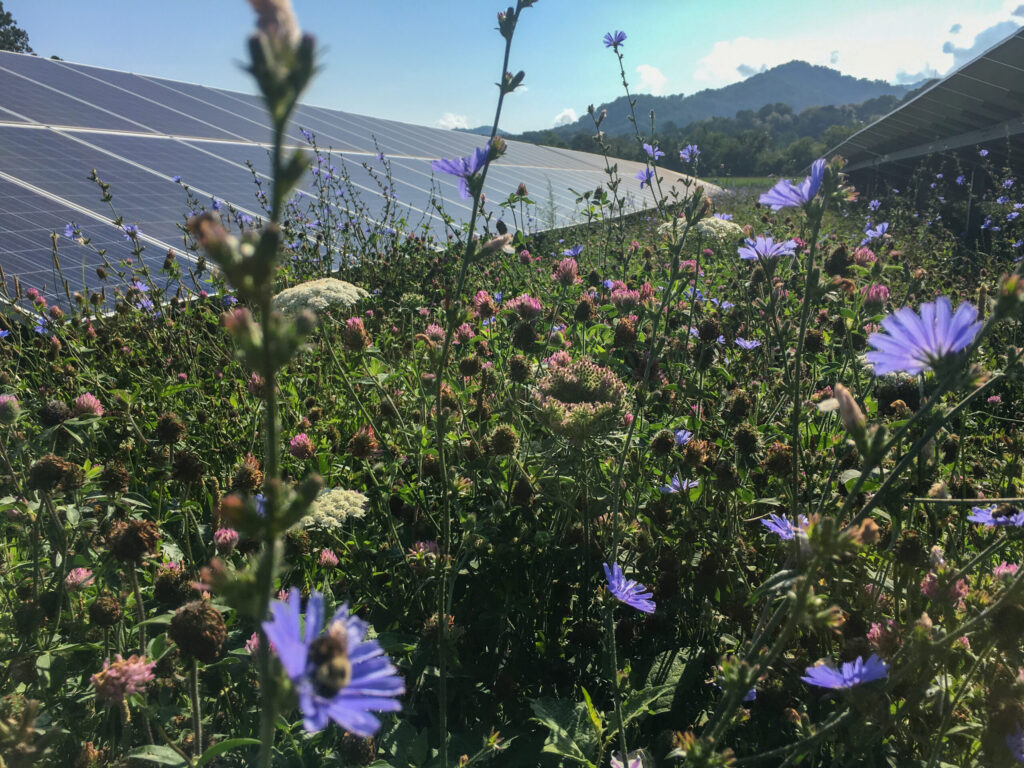
Yes. Depending on the site and local climate, Cypress Creek often plants pollinator-friendly vegetation around and beneath solar arrays. These habitats support bees, butterflies, and other pollinators that play a critical role in growing many of the foods we eat. Insect pollination contributes more than $34 billion to U.S. agriculture each year, yet pollinator populations are declining as natural habitats disappear. By creating pollinator habitat where appropriate, solar projects can help support biodiversity while strengthening the agricultural ecosystems that help feed America.
Sources: U.S. Fish & Wildlife Service, Pollinator Partnership
Environmental
Do solar projects use a lot of water?
Solar projects use very little water during construction and operation, making them well suited for areas with limited water resources. Unlike many conventional power plants, solar projects do not require water to generate electricity or cool steam, helping reduce overall water consumption while producing electricity. In agricultural regions facing water constraints, this can help preserve water resources for other important uses, including farming.
Do solar projects help with water retention?
No. Solar projects are designed to manage stormwater and, in many cases, can actually help reduce runoff and erosion compared to the land’s previous use. For example, when solar is built on former farmland, tilled fields are replaced with permanent vegetation beneath and around the solar panels. During construction, pollinator-friendly seed mixes are used to restore the site after construction, creating deep-rooted vegetation that helps absorb rainfall, retain water, reduce sediment runoff, and stabilize the soil.
Do solar projects harm wildlife?
No. Solar projects are carefully designed to avoid and minimize impacts on wildlife. Before construction begins, environmental studies are conducted to identify sensitive habitats, protected species, and other natural resources. Where appropriate, our project designs include wildlife corridors and passageways that allow local game species and other wildlife to continue moving through the landscape.
Because solar panels are elevated on steel posts, more than 90% of the land within a solar project remains available for vegetation that supports healthy soils and wildlife habitat. On previously disturbed land, habitat restoration with native grasses and pollinator-friendly plants has been shown to increase biodiversity within just a few years. Once operating, solar projects also create large areas with limited human activity, providing habitat that many wildlife species can use for decades.
How does Cypress Creek protect wildlife during site selection?
Before construction begins, environmental studies are conducted to identify sensitive habitats, protected species, and other natural resources. Where appropriate, our project designs include wildlife corridors and passageways that allow local game species and other wildlife to continue moving through the landscape.
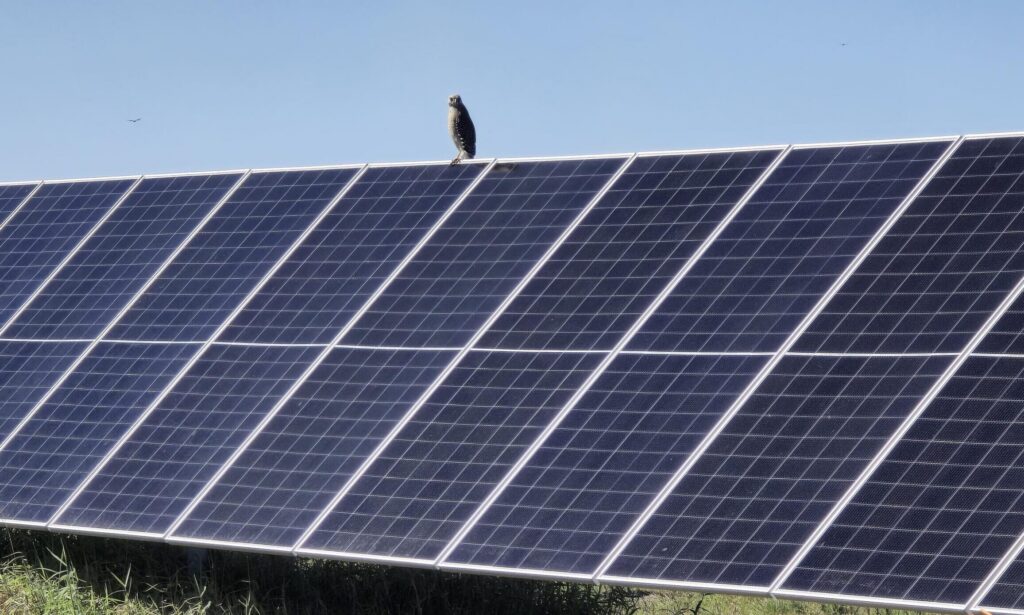
How will bird habitats be protected?
Cypress Creek develops our projects in a manner that conserves important habitats and species. The National Audubon Society strongly supports properly sited solar power as a renewable energy source helping reduce the threats posed to birds from air pollution caused by burning fossil fuels.
Source: National Audubon Society
What environmental benefits does solar energy provide?
Solar energy produces electricity with no air pollution during operation, helping improve air quality. Research by Lawrence Berkeley National Laboratory found that wind and solar generation helped prevent an estimated 1,200 to 1,600 premature deaths in the United States in 2022 by reducing air pollution from electricity generation.
Solar also uses very little water compared to many other forms of electricity generation, helping conserve water resources, especially in water-stressed regions. In addition, solar projects can support responsible land stewardship by establishing permanent vegetation that supports pollinators, reduces erosion and stormwater runoff, improves soil health, and creates habitat for wildlife.
Does anything grow under the solar panels?
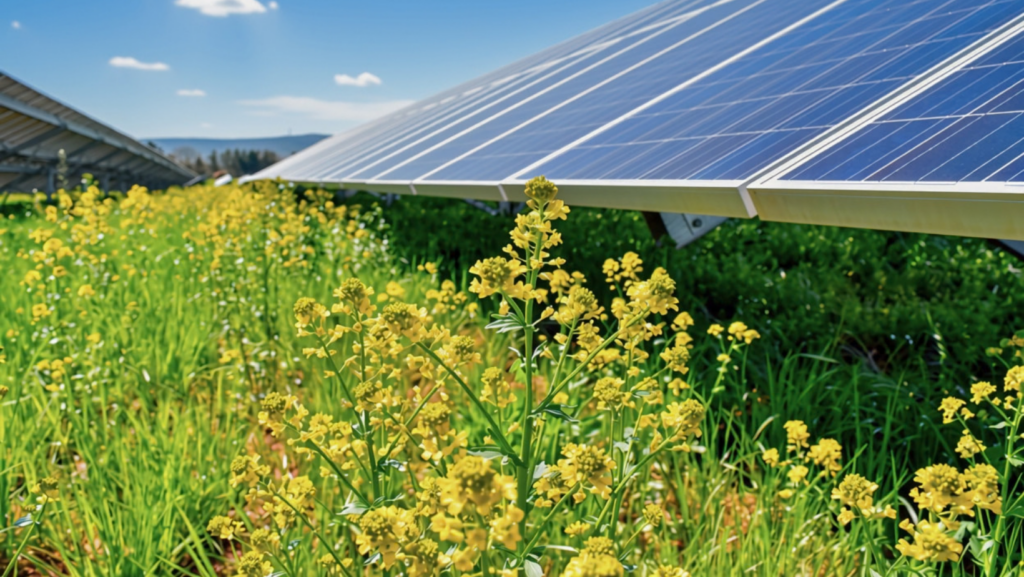
Depending on the local climate, plants can grow well under and around the solar panels. In fact, more than 90% of a solar project is available land since solar panels are mounted on racking that sits atop posts, and those posts only take up a small percentage of the land. That available land can be planted with native vegetation that improves the soil, increases biodiversity, and attracts birds, butterflies, honeybees, and other small wildlife.
We also review sites for additional opportunities to incorporate agrivoltaics, the combination of solar and agriculture, into design and operations.
Health & Safety
Do solar projects produce noise?
Solar projects make very little noise and are quiet neighbors. Solar panels themselves have no moving parts and do not make noise. Inverters and transformers are the only sources of audible sound at a solar project, and they are placed inside the project area to mitigate audible sound beyond the site boundaries. In addition, Cypress Creek adheres to any local regulations about noise levels and will conduct sound modeling to confirm our projects meet these requirements.
Are solar panels safe to live near?
Yes. Solar panels are safe for neighboring residents, and many homeowners have solar panels installed on their residences. In fact, solar projects have a positive benefit on air quality. Solar projects generate renewable power with zero air emissions and often replace older and less efficient fossil fuel-based sources of power that have significant air emissions. Studies have found that this is delivering concrete health benefits and avoiding premature mortalities attributed to air pollution.
Do solar panels release hazardous materials?
No. Solar panels are made primarily of glass, aluminum, copper, and semiconductor materials commonly found in household appliances and electronics. These materials are sealed within layers of tempered glass designed to withstand decades of outdoor exposure. Even if a panel is damaged, the glass remains bonded to the panel’s internal layers, helping keep it intact and minimizing the potential for debris.
Research has consistently shown that solar panels do not release harmful materials. Still, we believe in verifying that science in the communities where we operate. As part of the U.S. Department of Energy’s Solar Soil project led by Argonne National Laboratory, Cypress Creek participated in soil sampling at an operational solar project in Warren County, North Carolina, that has been operating since 2016. The sampling found no elevated concentrations of metals in the surrounding soil after nearly a decade of operation.
What fire safety measures are in place?
Cypress Creek solar projects comply with applicable fire and electrical codes, including National Electric Code (NEC) and National Fire Protection Association (NFPA) standards. We work with local emergency management agencies and fire departments to ensure first responders are familiar with site-specific safety procedures. Once online, our sites are monitored 24/7 to ensure efficiency and safety.
Do solar panels create glare?
Solar panels generate power by absorbing light, so any light reflected is energy wasted. To avoid this waste, most solar panels have textured glass and anti-reflective coating that reduces glare. Modern solar panels reflect as little as two percent of incoming sunlight.
How do you protect solar panels from hail or high winds?
Solar panels are mounted on trackers that follow the sun throughout the day to maximize energy production. These same trackers also help protect the panels during severe weather. Projects are monitored around the clock, and when hail or high winds are forecast, the trackers can automatically move the panels into a protective position to reduce the risk of damage. Solar panels are also built to last in harsh environments and tested to withstand severe weather, including strong winds and hail.
Are EMFs from solar projects a concern?
No. Solar panels themselves generate direct current (DC) and emit virtually no electromagnetic fields (EMFs). Multiple studies have found that EMF levels at the perimeter of a solar facility are negligible and comparable to those from everyday household appliances.
The highest EMF levels at a solar project occur immediately adjacent to electrical equipment such as inverters and transformers. Even then, exposure is very low. Standing next to one of the largest utility-scale inverters results in less EMF exposure than using many common household appliances, such as an electric can opener. EMF levels also decrease rapidly with distance.
Source: Advanced Power Alliance
Do solar panels increase local temperatures?
Any localized warming associated with a solar project is much smaller than the heat generated by urban areas and remains confined to the project site. Research from the University of Maryland found that temperature changes could not be measured 100 feet beyond the edge of a solar facility. In addition, the permanent ground cover planted at Cypress Creek projects helps cool the land surface, improve soil health, and further reduce potential localized temperature effects.
Source: Phys.org
Economics
What economic benefits do solar projects bring to landowners?
A land lease provides a steady, reliable source of income not tied to weather, commodity prices, rising input costs, or other market swings. This stable income helps keep farms running and supports rural economies. It also keeps land in the family for current and future generations, without pressure to sell.
How many jobs does a solar project create?
The number of jobs depends on the size of the project. During construction, solar projects create direct on-site jobs, typically for 12 to 18 months, while also supporting local restaurants, hotels, equipment suppliers, and other businesses.
Solar projects also support American manufacturing. More than 300 manufacturing facilities across 42 states supply the U.S. solar industry, while more than 140 facilities across 33 states support the battery energy storage system (BESS) supply chain. For every direct manufacturing job, the industry supports an additional four jobs throughout the supply chain and local communities.
Once construction is complete, solar projects create competitive-wage operations and maintenance jobs and generate ongoing spending on equipment, services, and maintenance, with millions of dollars invested in the local economy over the life of the project.
Source: American Clean Power Association
Does the solar industry create long-term employment?
Solar is expanding rapidly across the United States, generating affordable energy while offering career opportunities for hundreds of thousands of Americans. As of 2024, there were more than 280,000 solar energy jobs in the United States. These jobs were in all 50 states across all levels of education and experience.
What economic benefits do solar projects bring to rural communities?
Solar projects provide an additional source of tax revenue for schools and other local government services, with little demand for public services themselves. Increased tax revenues from solar projects can also have the added benefit of enabling property taxes to remain low for local homeowners. The American Clean Power Association estimates that utility-scale projects currently pay $1.8 billion annually in state and local tax payments and landowner lease payments, and that number is growing each year.
Source: American Clean Power Association
Are solar projects subsidized by taxpayers?
Utility-scale solar projects built by Cypress Creek are privately funded. That means no taxpayer dollars are used to build them. Like most energy projects — whether solar, wind, natural gas, or nuclear — these projects can currently qualify for federal tax credits. These aren’t government payments or subsidies. They are credits that reduce the amount of taxes the company owes, similar to how families might claim a tax credit for children or a mortgage deduction.
In short: private money builds the project, and the government provides a tax incentive, just like it does for many types of business investments.
Do solar projects lower energy costs?
Yes. Solar projects help lower electricity costs by adding more low-cost power to the electric grid. Like all power plants, the electricity generated by a utility-scale solar project typically flows into the local grid, where it is delivered to homes and businesses alongside electricity from other sources.
A helpful analogy is water flowing through a pipe. Electricity from many different power plants mixes together on the grid. Adding more low-cost solar energy increases the overall supply of electricity, which helps reduce wholesale electricity prices, particularly during periods of high demand when electricity is most expensive.
While electricity prices are influenced by many factors, including fuel prices, weather, and local utility policies, adding affordable solar generation helps improve price stability, strengthen America’s energy security, and meet growing electricity demand.
Reliability & Grid
Is solar energy reliable?
Yes. Solar energy is a reliable source of electricity, although it only generates power when the sun is shining. That is why it works best as part of a diverse energy portfolio that includes a mix of energy sources. By diversifying America’s electricity supply, solar helps strengthen our nation’s energy security, reduces reliance on any single fuel source, and helps meet growing electricity demand. Many solar projects, including many developed by Cypress Creek, also include battery energy storage systems, which store solar energy for use when it is needed most, further enhancing grid reliability and resilience.
At Cypress Creek, our projects are monitored and operated 24/7 using sophisticated weather forecasting and generation analytics to accurately predict energy production and optimize performance. Accurate forecasting allows grid operators to plan for when solar energy will be available, helping maintain a reliable and resilient electric grid.
Where does the power from solar projects go?
The power from a typical utility-scale solar project will feed into the local grid via preexisting transmission lines and provide a new, sustainable source of energy, enhancing a region’s energy diversification and reliability. Since electricity flows to areas that are closest with energy demand, the power produced at a solar project will likely be used locally or statewide, based on the needs of the region.
Does solar support American energy security?
Yes. Solar helps strengthen America’s energy security by expanding our domestic electricity supply using an abundant American energy resource: sunlight. By diversifying our energy mix, solar reduces reliance on any single fuel source while helping meet America’s rapidly growing electricity demand, supporting the reliable power needed to keep our economy strong and globally competitive.
Solar is also one of the fastest ways to add new generating capacity. In the first quarter of 2026, solar accounted for 60% of all new electricity-generating capacity added in the United States. Combined, solar and battery energy storage represented 91% of all new capacity, helping meet the urgent need for reliable electricity on America’s capacity-constrained grid.
Does solar energy strain the grid?
No. Before a solar project can connect to the electric grid, it must undergo a rigorous interconnection study to ensure it can operate safely and reliably alongside other power sources. Solar projects add much-needed generating capacity that helps meet America’s growing electricity demand while diversifying our energy supply. In some cases, strategically located solar projects can also reduce congestion on transmission lines and help defer costly grid infrastructure upgrades.
Decommissioning & Lifespan
How long do solar projects operate?
Once a project is fully operational and monitored around the clock, the Cypress Creek Solutions team diligently operates and maintains the site to ensure it runs efficiently and safely — providing dependable energy for 30 years or more, while being a responsible neighbor to the surrounding community.
Who is responsible for decommissioning?
Cypress Creek submits a full decommissioning plan for a solar project, adhering to any applicable state or local jurisdiction requirements and policies. The plan ensures that the solar equipment will be dismantled, removed, and recycled at the end of its life and that the restored land can return to agricultural activities or another use as landowners decide.
Is land restored after decommissioning?
Yes. Cypress Creek submits a full decommissioning plan for a solar project, adhering to any applicable state or local jurisdiction requirements and policies. The plan ensures that the solar equipment will be dismantled, removed, and recycled at the end of its life and that the land can return to agricultural activities or another use as landowners decide.
Who pays for decommissioning?
The costs of decommissioning do not fall upon the community or landowners, rather they are the responsibility of the project owner. While costs vary by region and project size, third-party engineering estimates forecast that the salvage value of solar panels, racking, steel posts, and copper wiring can exceed the costs of equipment removal and land restoration.
Are solar panels recyclable?
Yes. The solar industry is ahead of the curve on recycling. The Solar Energy Industries Association has created a national program that aggregates and vets the services offered by recycling vendors in the U.S. Recycling capacity in this National PV Circularity Program exceeds the volume of decommissioned modules entering the waste stream.
Sources: Solar Energy Industries Association, SolarRecycle.org
What is repowering?
Repowering is the process of upgrading a solar project by replacing older solar panels with newer, more efficient technology while keeping much of the existing infrastructure in place. This allows the project to generate more electricity from the same site, extending its useful life and making better use of the original investment.
Energy Storage
Project Basics
What is a Battery Energy Storage System (BESS)?
Utility-scale battery energy storage systems, also referred to as grid-scale, store energy in rechargeable batteries and then discharge it into the grid when it is needed most. They help meet peak electricity demand, provide reliable electricity during severe weather and other times when the grid is under stress, and help prevent costly and dangerous power outages.
By storing lower-cost electricity when it is abundant and delivering it during periods of high demand, battery storage also helps keep electricity prices more affordable for homes and businesses. Without energy storage, electricity must be produced and consumed at exactly the same time. Utility-scale battery storage gives grid operators greater flexibility by storing electricity and quickly delivering it at the most strategic times and locations, helping improve both reliability and affordability.
What do energy storage projects look like?
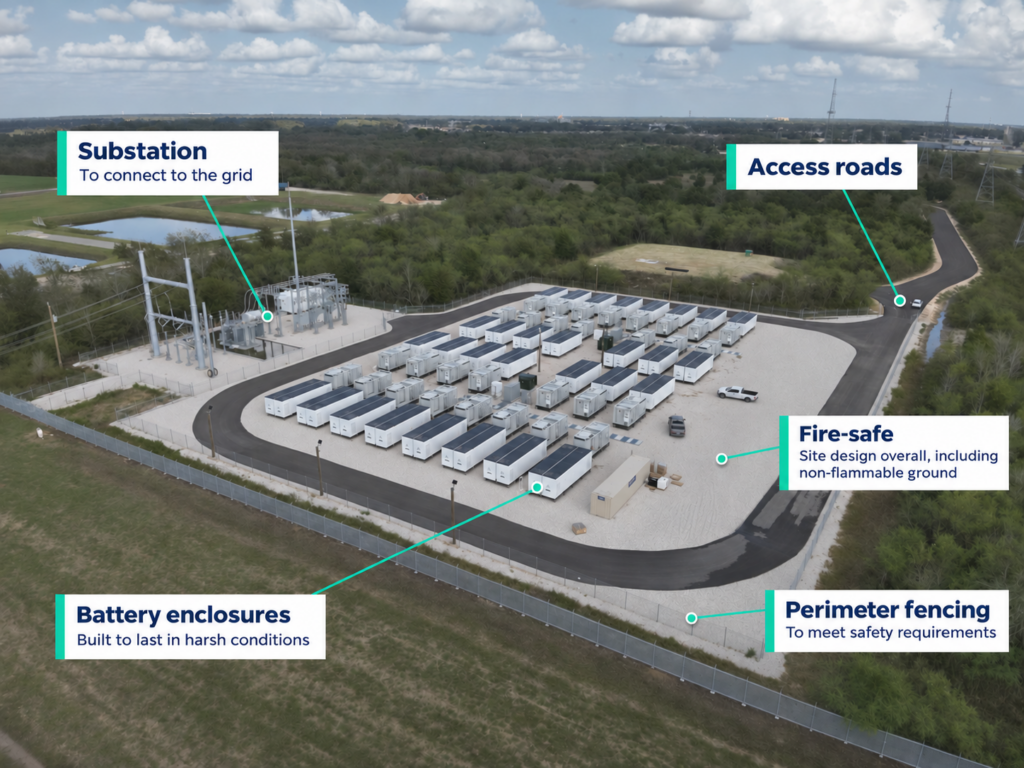
Energy storage systems connected to the electrical grid are housed in specially engineered shipping containers, outdoor-rated cabinets, or purpose-built buildings. The overall project footprint will depend on the size of the energy storage project. Generally, energy storage systems have a high energy density, meaning that they take up minimum space relative to the amount of power they release.
How long does an energy storage project last?
Utility-scale battery energy storage projects are long-term energy assets with an expected service life of 20 to 30 years. Major equipment, including battery cells, can be replaced or upgraded over time, allowing the project to continue operating for decades. Depending on how they are used, replaced battery cells may still retain significant storage capacity and can often be repurposed for less demanding applications, giving them a valuable second life.
Battery Storage Basics
How does battery energy storage work?
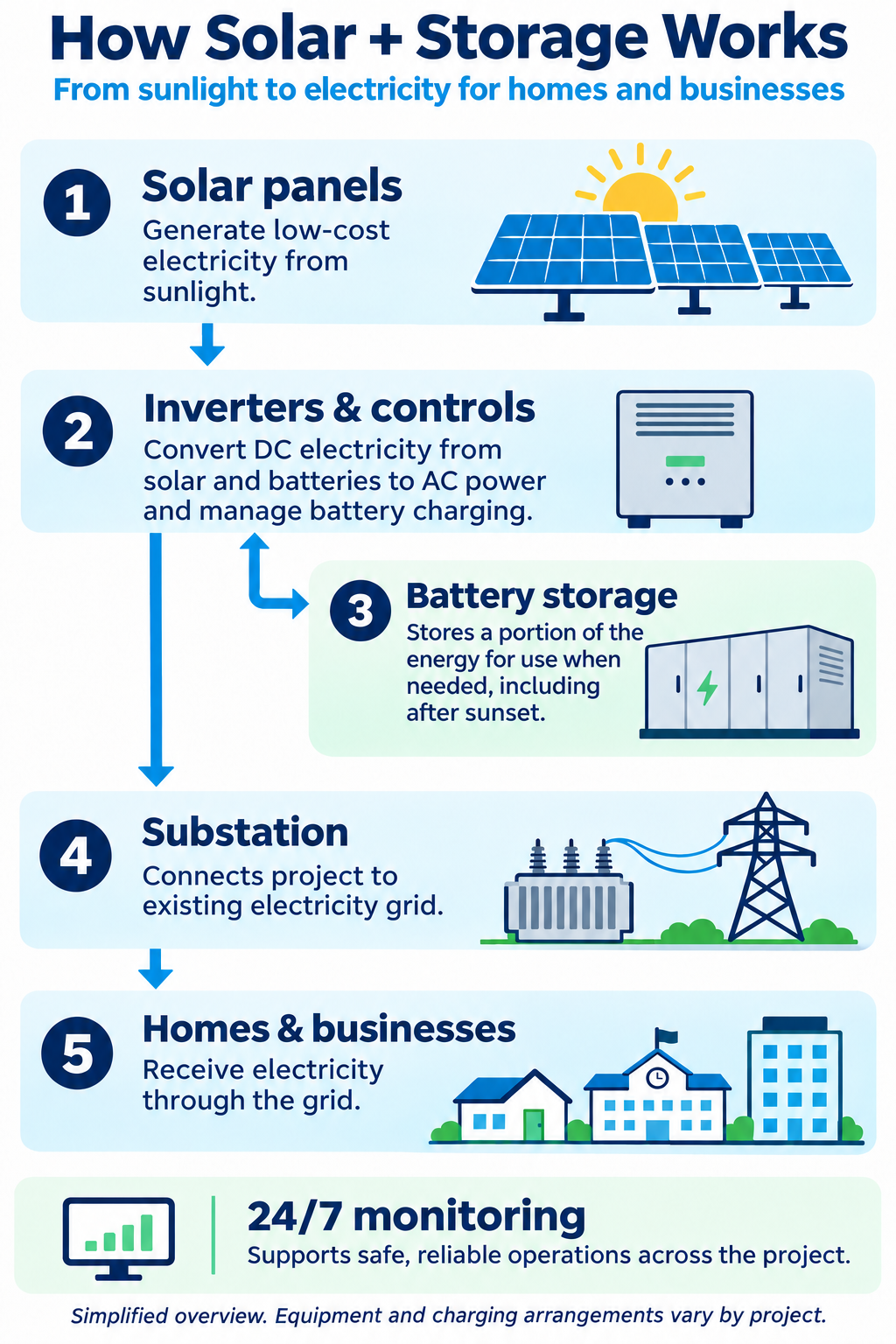
Utility-scale battery energy storage systems store electricity and discharge it when it is needed most, such as during periods of high electricity demand, severe weather, or other times when the grid is under stress. This helps improve grid reliability, reduce the risk of power outages, and keep electricity more affordable for homes and businesses. Battery storage systems consist of large battery racks housed in shipping containers, outdoor-rated enclosures, or purpose-built structures. They are strategically located throughout the electric grid, where they can efficiently store and deliver electricity when and where it is needed.
Community Impact
Can battery energy storage help in emergency situations?
Yes. Battery energy storage systems help improve grid reliability by responding within seconds to deliver electricity when demand is high or when the electric grid is under stress, such as during severe weather or other emergencies. They help reduce the risk of outages, support faster grid recovery, and help keep critical services operating.
How do battery energy storage projects benefit local communities?
Battery energy storage projects provide steady, reliable benefits for their communities:
- Fewer power outages: Battery storage increases grid flexibility and helps keep the lights on during periods of high demand, equipment outages, and severe weather.
- More affordable electricity: Battery storage stores electricity when it is lower cost and delivers it when demand is highest. This helps reduce strain on the grid and can lower electricity costs over time.
- A more reliable electric grid: Battery storage helps balance electricity supply and demand, improving grid reliability and ensuring power is available when homes and businesses need it most.
- More affordable energy around the clock: Battery storage makes energy from sources like solar available even when the sun is not shining, helping meet growing electricity demand with affordable power.
- Jobs and local economic growth: Battery storage projects create construction jobs, support American manufacturing, and generate long-term tax revenue that helps fund schools, roads, emergency services, and other community priorities. Today, the U.S. energy storage industry supports more than 78,000 jobs, while utility-scale energy storage projects deliver more than $580 million annually to local communities through tax revenue and land lease payments.
Source: American Clean Power Association
Agriculture
Can land near an energy storage project still be farmed?
Yes. Battery energy storage projects store a large amount of energy in a relatively small footprint, so they typically use only a limited portion of a property. That means most of the surrounding land can remain in agricultural production for crops or livestock. For many landowners, hosting a battery storage project provides a stable, long-term source of income that allows them to continue farming the rest of their property. This can help support multigenerational farming operations and provide greater financial stability through changing market conditions.
Environmental
Do battery systems use a lot of water?
Battery energy storage systems use very little water during normal operation. Unlike many conventional power plants, they do not require water to generate electricity or cool steam. Cypress Creek’s battery energy storage systems use enclosed heating, ventilation, and air conditioning (HVAC) systems to maintain appropriate operating temperatures, resulting in minimal water use over the life of the project.
Do battery systems harm wildlife?
Battery energy storage systems are carefully sited to protect wildlife and natural resources. Before construction begins, environmental studies identify sensitive habitats, protected species, wetlands, and other environmental resources. Projects are designed to avoid or minimize impacts and must comply with applicable environmental regulations. During operation, battery energy storage systems produce no air emissions and use negligible amounts of water.
Property & Land Use
Will a battery energy storage project affect my property value?
Recent research indicates that utility-scale battery energy storage systems do not have a measurable impact on nearby residential property values. A 2025 study from the Wharton School at the University of Pennsylvania analyzed home sales near 178 operational battery energy storage projects across California, Massachusetts, and New York and found no statistically significant impact on nearby property values compared to similar homes located farther away.
Source: University of Pennsylvania
How much land does a utility-scale battery energy storage project require?
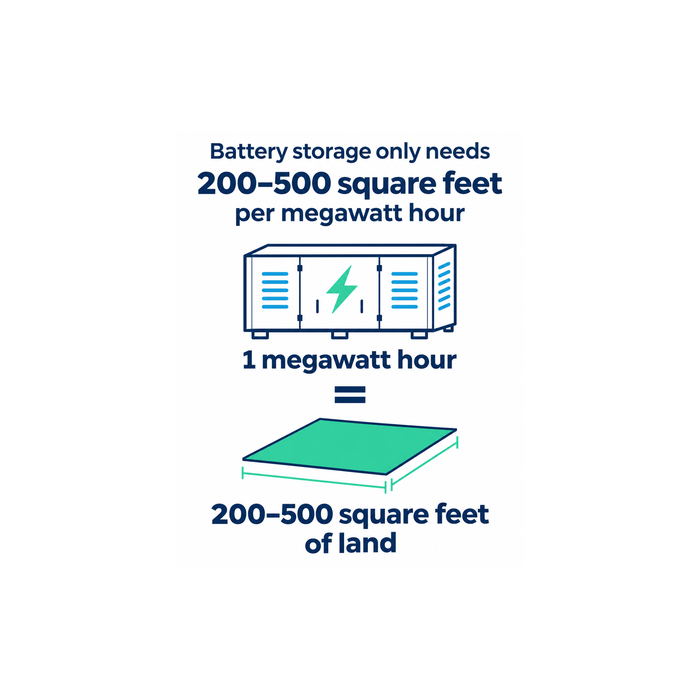
Battery energy storage systems have a high energy density, meaning they can store a large amount of electricity in a relatively small space. As a result, utility-scale battery storage projects typically require only 5 to 20 acres of land, depending on the size and design of the project.
What happens to the land after a battery energy storage project ends?
Utility-scale battery energy storage systems are designed with end-of-life management in mind. Every project includes a decommissioning plan developed prior to construction, meaning we begin planning for the responsible reuse, recycling, and disposal of project components decades before the end of the project’s operating life. Equipment is removed, valuable materials are recycled whenever possible, and disturbed areas are revegetated. The goal is to leave the site in a stable condition consistent with applicable permit requirements and the landowner’s future plans for the property.
Health & Safety
Are battery energy storage projects safe?
Safety is Cypress Creek’s top priority. Since Lithium Iron Phosphate (LFP) batteries became commercially available, Cypress Creek has used this technology in our battery energy storage systems. LFP batteries have a strong safety record and are designed to remain stable even under high temperatures and extreme conditions. They also contain no cobalt or nickel, making them a durable, cost-effective technology with a more responsible supply chain.
Our battery energy storage systems are monitored 24 hours a day, 7 days a week and include multiple layers of protection. Advanced battery management systems continuously monitor battery performance, temperature, and other operating conditions. If conditions fall outside normal operating ranges, the system can automatically isolate or shut down affected batteries.
In the unlikely event of an incident, battery containers are designed with multiple safety features to help confine and suppress an event within the container, preventing it from spreading. Cypress Creek also works closely with local fire departments, fire marshals, and permitting authorities to ensure emergency response plans and safety protocols are in place before a project begins operating.
Source: Battery Technology
What codes and standards are in place for battery energy storage?
Like all electrical infrastructure, utility-scale battery energy storage systems are highly regulated, with rigorous codes and standards developed by international, U.S., and local experts. Utility-scale batteries that deliver energy into the grid must be certified and go through extensive testing before being deployed, with requirements far beyond those for most commercially available batteries used for consumer applications.
At Cypress Creek, we design, construct, and operate our energy storage systems in accordance with all relevant national and international standards and procedures, proven to keep our sites safe. These include the National Electric Code (NEC), International Fire Code (IFC), International Building Code (IBC), International Electrotechnical Commission (IEC), UL Solutions (formerly Underwriters Laboratories), and National Fire Protection Association (NFPA).
Do battery energy storage systems contain hazardous materials?
Battery energy storage systems contain materials that must be handled responsibly, but under operating conditions those materials are safely sealed within individual battery cells and are not released into the environment. At the end of their service life, battery systems are removed and managed through specialized recycling and disposal programs in accordance with applicable federal, state, and local regulations.
How is battery energy storage maintained?
Battery energy storage systems require relatively little maintenance because they have no moving parts. They are monitored 24 hours a day, 7 days a week through a Supervisory Control and Data Acquisition (SCADA) system, which continuously monitors battery performance, operating conditions, and system status in real time. The SCADA system works together with an Energy Management System (EMS) to optimize system performance and help ensure safe, reliable, and efficient operation.
In addition to continuous remote monitoring, Cypress Creek performs routine inspections, preventive maintenance, software updates, and equipment testing throughout the life of the project.
Does battery energy storage make noise?
Battery storage facilities are quiet when operating. There are few moving parts, and the equipment is housed in a container that muffles any sound. In addition, Cypress Creek conducts analyses of the maximum sound levels emitted from the systems and ensures compliance with all applicable requirements.
Economics
How does energy storage reduce electricity costs?
Utility-scale energy storage reduces electricity costs by:
- Preventing or reducing the risk of costly blackouts or brownouts by increasing peak power supply and by serving as backup power.
- Storing energy when prices are low and discharging it during peak periods when rates are higher.
- Supporting the integration of more low-cost, local solar energy generation that is now the cheapest source of electricity.
- Helping the grid adjust to fluctuations in demand and supply, which optimizes grid efficiency, alleviates transmission congestion, and increases grid flexibility. This reduces overall system costs.
- Limiting our nation’s exposure to volatile fuel costs or the need for costly energy imports.
Do battery storage subsidies burden taxpayers?
Utility-scale battery energy storage projects built by Cypress Creek are privately funded. That means no taxpayer dollars are used to build them. Like most energy projects — whether solar, wind, natural gas, or nuclear — these projects can currently qualify for federal tax credits. These aren’t government payments or subsidies. They are credits that reduce the amount of taxes the company owes, similar to how families might claim a tax credit for children or a mortgage deduction.
In short: private money builds the project, and the government provides a tax incentive, just like it does for many types of business investments.
What jobs does a battery storage project create?
Battery energy storage projects create a range of jobs during development and construction, including engineering, skilled trades, equipment installation, electrical work, trucking, and project management. Once operational, projects also support long-term jobs in operations, maintenance, monitoring, and asset management.
The industry’s economic impact extends well beyond the project site. More than 78,000 Americans currently work in the U.S. energy storage industry, and more than 140 manufacturing facilities across 33 states support the battery energy storage system (BESS) supply chain. As demand for energy storage grows, these projects continue to support American manufacturing and create jobs across the country.
Sources: American Clean Power Association, Solar Energy Industries Association
What tax revenue do energy projects generate?
Battery energy storage projects generate stable, long-term property tax revenue that helps support local governments for decades. This funding can help pay for priorities such as schools, roads, public safety, emergency services, and other essential community needs.
Across the United States, utility-scale energy storage projects currently contribute more than $580 million annually to local communities through property taxes and land lease payments. As more projects are built, that economic contribution continues to grow.
Source: U.S. Energy Storage Coalition
Reliability & Grid
How does energy storage support the grid?
Energy storage enhances grid reliability by making power accessible when needed. Energy storage can serve as a dependable power source in extreme weather events, during periods of peak energy demand, or in the case of equipment failures. These systems match power supply and demand, making the grid more resilient and efficient.
Decommissioning & Lifespan
Can grid-scale batteries be recycled?
Yes. Utility-scale energy storage systems are designed with end-of-life management in mind. Many of the valuable materials in battery cells can be recovered and recycled for use in new products. As battery recycling technology and infrastructure continue to expand, recycling is expected to play an increasingly important role in creating a circular supply chain.
Cypress Creek is committed to reusing and recycling materials whenever possible. Every project includes a decommissioning plan developed during the early stages of development, meaning we begin planning for the responsible reuse, recycling, and disposal of project components decades before the end of the project’s operating life.
Who pays for BESS decommissioning?
Cypress Creek Energy covers all costs associated with decommissioning battery energy storage projects. Neither local residents nor landowners bear any financial burden for removing equipment or restoring the land.